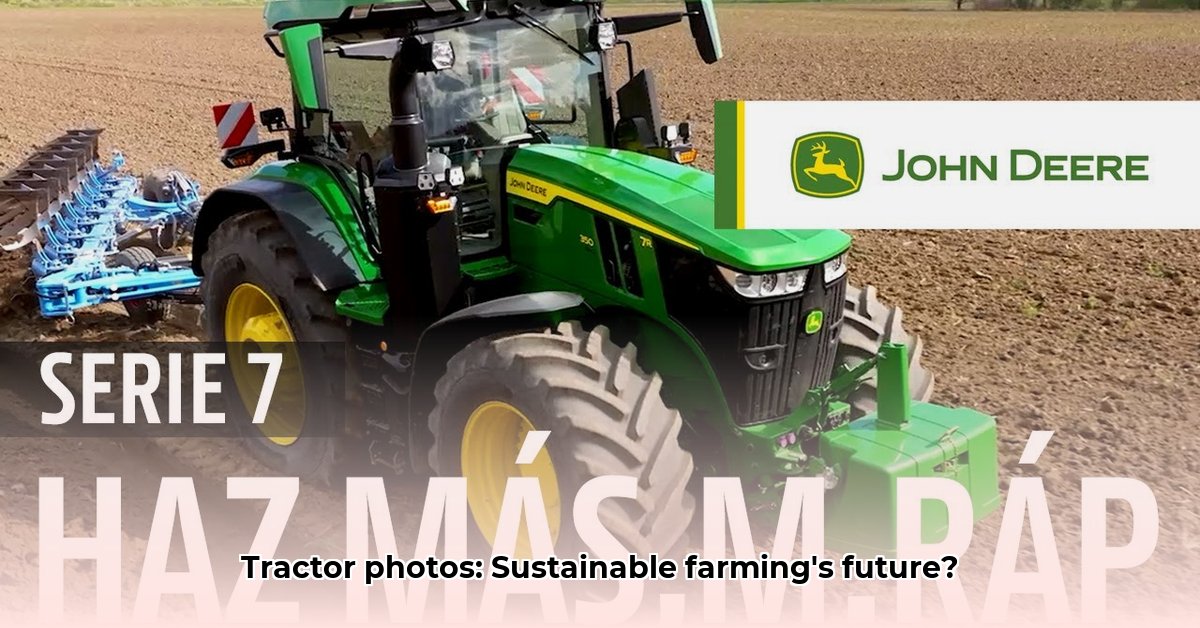
Fotos de Tractores: A Visual Story of Sustainable Agriculture
Forget dusty fields and back-breaking labor. Today's farming is a high-tech endeavor, and the tractor, once a symbol of brute force, is now a key player in sustainable agriculture. These aren't your grandfather's tractors; they're precision instruments, seamlessly integrating technology to optimize resource use and minimize environmental impact. This article explores how "fotos de tractores" (tractor photos) illustrate the transformation of modern farming, showcasing the power of precision agriculture. For toy tractors, check out these John Deere toy tractors.
Precision Farming: Smart Machines, Smart Farming
Precision agriculture, or precision farming, allows farmers to fine-tune operations with unprecedented accuracy. Imagine a tractor guided by GPS signals, planting seeds with pinpoint accuracy, applying fertilizer and water only where needed. This level of control dramatically reduces resource waste. Photos of these advanced machines vividly depict this revolutionary approach. Isn't it remarkable how a simple image can convey such complex technological advancement? One compelling foto de tractor might show a satellite-guided planter, showcasing the technology's role in optimizing seed placement and reducing the need for excessive inputs.
These tractors aren't merely machines; they're data-collecting powerhouses. Sensors monitor soil conditions, crop health, and more, providing real-time insights to farmers. This data-driven approach allows for targeted pesticide application, minimizing environmental impact and improving resource efficiency. A foto de tractor showing targeted spraying dramatically illustrates the shift from blanket pesticide application to more environmentally conscious methods. How effective do you think targeted pesticide application is compared to traditional methods? Studies consistently show a significant decline in pesticide usage with precision technologies.
The Data Deluge: Big Data, Big Benefits
The sheer volume of data generated by these advanced tractors is staggering. Sophisticated software analyzes this information, revealing valuable insights into crop health and resource optimization. For example, a farmer might discover that a specific area of a field requires more fertilizer than others. This precise approach not only maximizes yield but also significantly reduces waste and environmental damage. The potential benefits are enormous: increased yields, reduced environmental impact, and more efficient land management.
However, big data brings its own challenges. Protecting sensitive farm data from cyber threats is paramount. Reliable cloud-based storage offers powerful analytical tools but introduces risks of data breaches. Farmers must also acquire the technological skills necessary to effectively utilize and interpret this data. What measures can ensure data security while maximizing the benefits of precision agriculture? Industry experts highlight the importance of robust cybersecurity protocols and regular data backups.
The Challenges and Opportunities of Precision Agriculture
While the advantages are apparent, the wider adoption of precision farming faces obstacles. The high initial investment can be prohibitive for smaller farms. Furthermore, achieving seamless integration between different precision farming systems can be complex. And finally, concerns remain about the environmental footprint of manufacturing this sophisticated equipment. Comparing fotos de tractores – an older model next to a modern one – underscores the technological leap and the associated challenges.
Despite these hurdles, the long-term benefits outweigh the challenges. Precision agriculture offers the potential for significantly increased efficiency, substantial environmental improvements, and greater food security for a growing global population. The fotos de tractores, representing this technological shift, paints a picture of a brighter future.
Collaboration: A Key to Precision Agriculture Success
The transition to sustainable farming requires a collaborative effort. Farmers, researchers, technology companies, and government agencies must work together to overcome the challenges. Investment in ongoing research is crucial, as are user-friendly software and robust data protection protocols. Government support—including subsidies and financial incentives—can facilitate the adoption of new technologies.
Weighing the Risks: A Realistic Perspective
While the potential benefits of precision agriculture are substantial, potential drawbacks must be acknowledged. These include equipment failure, data breaches, and regulatory non-compliance. A risk assessment matrix can help to effectively manage these risks. The fotos de tractores themselves, however, should not overshadow the need for careful planning and risk management strategies. A balanced approach acknowledges both the potential and the potential pitfalls.
How to Calculate ROI for Precision Agriculture Technology Investments
Calculating the return on investment (ROI) for precision agriculture technology requires a holistic approach that extends beyond simple cost-benefit analyses. This includes considering operational efficiency, safety improvements, labor savings, market adaptability, and long-term growth potential. While precise ROI prediction remains challenging due to variable yields and external factors, a comprehensive approach—considering both financial and environmental benefits—provides a more realistic assessment of the long-term value of precision agriculture.
Key Takeaways:
- A comprehensive ROI assessment considers factors beyond simple cost savings.
- Financial benefits are complemented by broader sustainability and environmental improvements.
- Data management and continuous learning are crucial for maximizing long-term benefits.
The future of sustainable farming is bright, and the fotos de tractores serve as a powerful visual testament to this evolution. Precision agriculture, with its technological innovations and data-driven decision-making, promises a more efficient, resilient, and environmentally conscious approach to food production, securing a sustainable future for generations to come.